

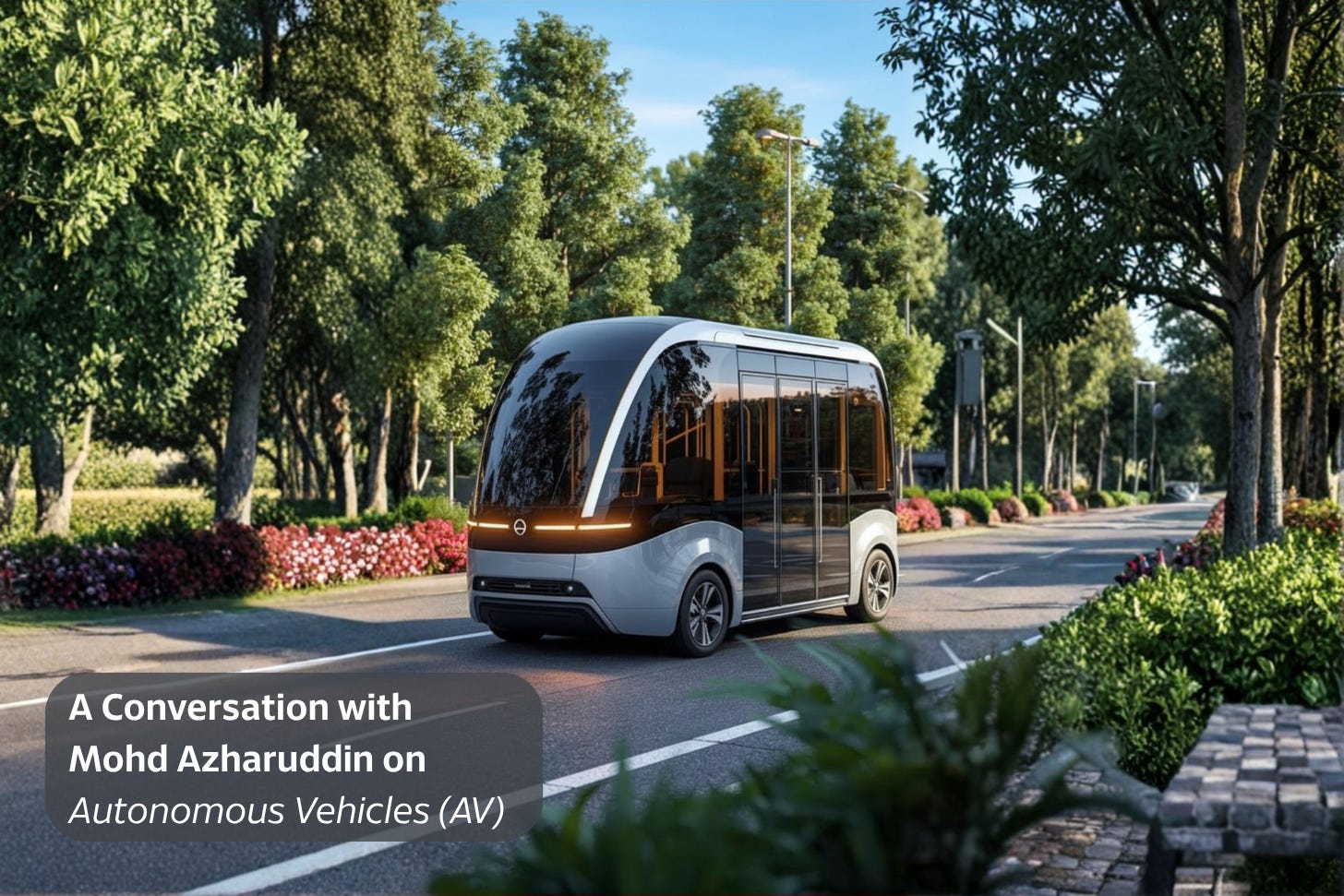
In places where traffic is part of everyday life, driving is rarely just about getting from one place to another. It’s time spent waiting, watching, and staying alert. And during festive seasons, it only intensifies. Just like during the recent Hari Raya Aidilfitri, when highways filled up as millions travelled, with multiple road incidents further worsening congestion across major routes.
But what if that time didn’t have to be spent driving at all? That’s the idea behind autonomous vehicles (AVs).
Whether it’s catching up on work, reading the news, or just taking a breather before the next part of the day. It’s a small shift in concept that could have a very different impact on how land mobility is experienced, especially for those who don’t have the option to drive in the first place.
Recently, Sunway iLabs sat down with Mohd Azharuddin Mat Sah, a prominent figure in Malaysia’s mobility and public transport sector: former CEO & President of Prasarana, and now Executive Director of Sunway Group President’s Office, to explore what that future could really look like.
He points out that autonomous vehicles have the potential to reshape how mobility evolves. Just a century ago, transport was built out of necessity, not foresight. AVs today sit in a similar place, with the prospect to reshape our cities and modern suburbs, only this time, with the opportunity to plan ahead.
How do Autonomous Vehicles Work?
At a basic level, an AV system is designed to replicate what a human driver does. It relies on a combination of sensors such as cameras, radar, and lidar, as well as artificial intelligence (AI) to interpret road conditions, detect obstacles, and make decisions in real-time.
Those decisions are then put into action, like adjusting steering, accelerating or slowing down, and braking when needed to navigate traffic safely.
But we still have a long way from adopting fully autonomous Level 5 vehicles.
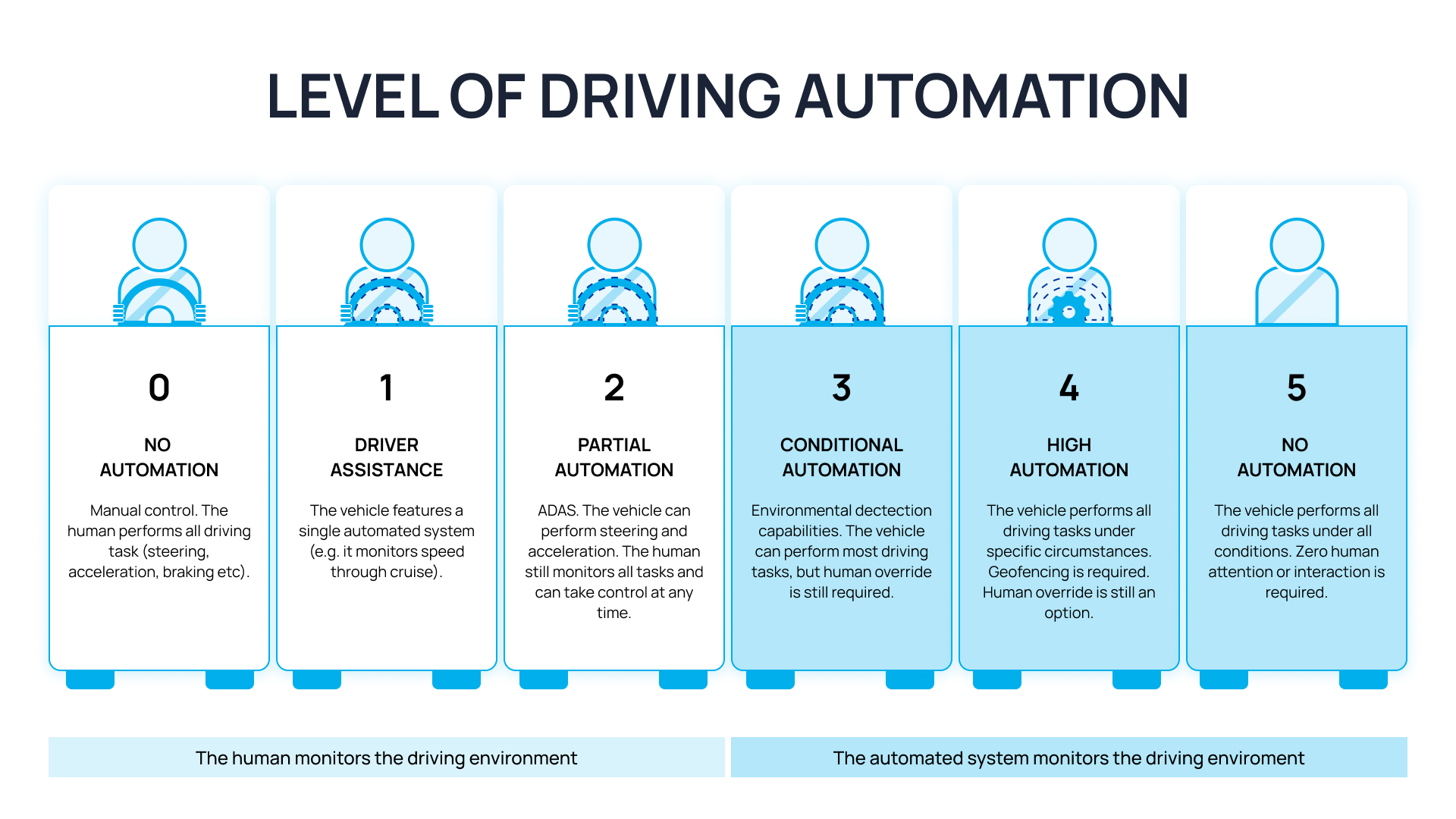
Most systems today fall within a defined spectrum of automation. Today’s AVs, primarily Level 2 and Level 3 systems, still require human oversight, where drivers can briefly take their attention off the road. Meanwhile level 4 systems operate without human drivers but only within specific areas or conditions.
Because developing autonomous systems is complex and expensive, AVs today are mostly deployed as commercial services rather than personal use.
Why AVs are Gaining Attention
When cars first went mainstream, they gave people the freedom to move on their own terms, yet every trip demands attention, whether stuck in traffic or cruising on the highway. AVs are trying to keep the freedom, but take away the need to constantly focus on driving.
For all the attention on the technology itself, the real question is: what problem does it solve?
Greater Road Safety
Safety stands out as one of the most immediate values, a point also raised by Azharuddin.
Road safety remains a significant concern. In Malaysia, more than 3,000 road fatalities were recorded in 2025, highlighting the ongoing risks faced on the road and the need for safer solutions.
Many of these incidents stem from human error: distraction, fatigue, or split-second misjudgements. AVs attempt to address this by shifting decision-making to systems that don’t get tired or distracted. Systems that are designed to follow road rules, reducing risks that most commonly lead to accidents today.
Operational Efficiency
But beyond safety, there are also operational pressures shaping adoption. Across public transport, logistics, and mobility services, there is an increasing reliance on human drivers, along with growing challenges in maintaining that workforce. Self-driving systems offer a way to ease that dependency while improving efficiency over time. Some of the most immediate applications include:
Robotaxis – providing on-demand ride-hailing services, similar to Grab or Uber
Autonomous shuttles – providing fixed-route passenger transport in areas like campuses, townships and transit hubs
Autonomous trucks – supporting long-haul logistics movement
Autonomous service vehicles - supporting urban maintenance, such as robosweepers for sanitation
Where Progress Meets Friction
For all the progress being made, autonomous vehicles are still far from widespread adoption. The biggest hurdle today is regulation.
In motion, under trial
In Malaysia, AV development has already begun moving onto public roads. Guided by the Ministry of Transport’s (MOT) Guideline for Public Road Trials of Autonomous Vehicles and the National Regulatory Sandbox, pilot programmes have been introduced to test how AV systems perform in urban environments.
Over the past few years, several initiatives have taken shape: from the MyAV testing routes in Cyberjaya first approved in 2020, to autonomous bus trials along Sunway BRT in 2022, and subsequent trials in Putrajaya in 2024. These projects test how AV systems perform in real-world conditions, while giving regulators the data they need to move forward.
But for the most part, they still remain in the pilot phase. A full legal framework for widespread deployment has yet to be put in place, and the reason comes back to regulation.
The road to scale: bound by rules
Moving from trials to everyday use means going through multiple layers of approval—across federal agencies like the MOT, Road Transport Department (JPJ), Land Public Transport Agency (APAD), and Malaysian Institute of Road Safety Research (MIROS), as well as local authorities responsible for specific roads and environments. Current frameworks are designed to support testing, not full-scale deployment.
At the centre of it all is a fundamental question: how safe is safe enough?
As Azharuddin puts it “the key lies in how robust the system is, whether it can assess its surroundings and respond appropriately”.
Because deploying AVs isn’t just about whether a vehicle can operate on its own. It’s about whether it can do so consistently in real-world conditions. That includes handling heavy rain, unclear road markings, and unpredictable traffic behaviour, environmental factors that are part of everyday driving.
It also goes beyond the vehicle itself. Self-driving systems rely on a wider ecosystem: connectivity, infrastructure, and communication between vehicles and their surroundings.
There is also still unresolved questions of liability and insurance: who is responsible when something goes wrong—the human, or the system?
Traditionally, accidents are judged by negligence, where a driver is held responsible for failing to exercise reasonable care. In contrast, if a vehicle is deemed inherently unsafe, liability can shift to the manufacturer.
But AVs blur this distinction. Countries like the United Kingdom are already taking steps to address this through the Automated and Electric Vehicles Act 2018 (AEVA) and the Automated Vehicles Act 2024 (AVA).
While the UK is still finalizing the detailed operational framework needed for full implementation, the legal groundwork is clear: these laws extend insurance to cover autonomous driving, and when a vehicle is operating in authorised self-driving mode, responsibility shifts away from the human occupant to the companies behind the system.
For now, the technology is advancing, but the system around it is still catching up.
Much of the early AV development in Malaysia has been driven by players like eMoovit, a local startup focused on building software that can turn different types of vehicles into autonomous systems for urban use.
But beyond Malaysia, the technology is already being rolled out at scale.
Deployment: From the East to the West
Adoption across markets, however, is not one-size-fits-all. Vehicles must align with local road systems, such as left- or right-hand drive (LHD/RHD), as well as local environmental conditions, such as weather and road quality, factors that shape where AVs can realistically operate.
Globally, companies like Waymo, Zoox, Baidu, WeRide, and Pony.ai are already deploying autonomous systems across different markets. BCG predicts that the United States and China are expected to dominate the initial growth of AVs, driven by supportive regulations, infrastructure investments, and market conditions.
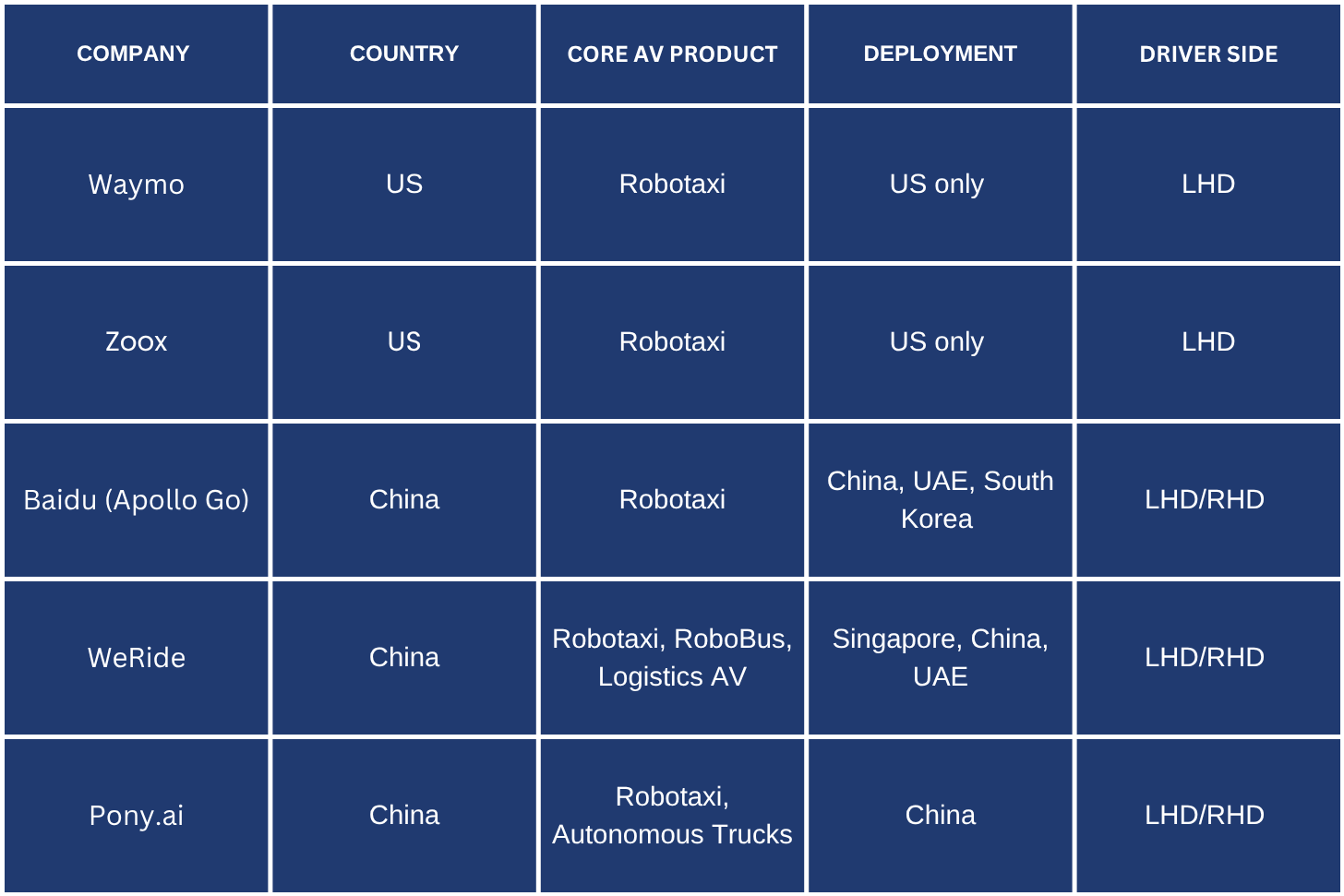
In the United States, companies like Waymo and Zoox are already pushing AVs into real-world use. Waymo, for instance, is now providing around 500,000 paid robotaxi rides every week across 10 cities, while Zoox, has served over 300,000 riders across Las Vegas and San Francisco, showing that self-driving transport can operate as a commercial service.
In China, companies like Baidu and WeRide are scaling rapidly with strong policy support, backed by national initiatives that prioritise AV development through R&D funding, streamlined approvals, and infrastructure built to accommodate autonomous systems.
Baidu’s Apollo Go has reached over 300,000 weekly rides, with expansion beyond China into markets like South Korea, and WeRide, on the other hand, now operates a global robotaxi fleet of over 1,000 vehicles across multiple cities, including commercial operations in places like Guangzhou and Abu Dhabi.
Singapore has also taken a more structured approach, with regulatory frameworks and pilot initiatives backed by agencies like the Land Transport Authority (LTA) and NTU’s CETRAN, creating an environment for AV testing and deployment. This has helped attract companies like WeRide and Pony.ai to test and gradually commercialise their services, including Grab-WeRide’s Ai.R autonomous shuttle service, which recently began public operations in Punggol.
Where This Leaves Us
Autonomous vehicles are not just about replacing drivers, the value lies in improving safety and efficiency, while also opening up new opportunities across the land mobility ecosystem.
As Azharuddin highlighted, “It’s not about taking jobs away. Instead of driving, people can be managing systems, working with data, and building skills that are more relevant in today’s AI-driven world.”
Over time, this could contribute to a more connected, efficient and sustainable urban future.
With plans underway to establish Malaysia’s own legal framework for AVs, and companies like Pos Malaysia already exploring real-world applications through initiatives like the six-month autonomous logistics vehicle trial, it suggests that AVs may soon become part of our everyday reality.
Update: Since this article was published on 28 April 2026, China has reportedly suspended the issuance of new autonomous-driving permits following the outage involving Baidu’s Apollo Go robotaxis in Wuhan on 31 March 2026, where more than 100 vehicles stalled on city streets. (China suspends autonomous driving permits after Baidu outage | The Star)
Acknowledgements: Thank you to Mr. Mohd Azharuddin and the Sunway iLabs team for their invaluable contribution and insights in preparing this article.
References
Allianz. (2025). Allianz Motor Day 2025: HANDS OFF – The Safety Promise of Autonomous Driving.
Automated and Electric Vehicles Act 2018. (2018). Legislation.gov.uk.
Automated Vehicles Act 2024. (2024). Legislation.gov.uk.
Digital News Asia. (2020). Now it gets real – Malaysia approves first autonomous vehicle testing routes in Cyberjaya by Futurise and Ministry of Transport.
Hagenmaier, M., Pfaffinger, S., Bert, J., Wegscheider, A. K., Cui, D., Lang, N., Schaber, L., & Brunner, R. (2026). Here at Last: The Evolution of the Robotaxi. BCG Global.
Kalbana Perimbanayagam. (2026). Accidents, heavy traffic slow major highways as Malaysians return from Aidilfitri. NST Online; New Straits Times.
Kang, L. (2026a). WeRide robotaxi fleet surpasses 1,000 vehicles. CnEVPost.
Kang, L. (2026b). Baidu’s Apollo Go robotaxi hits 300,000 weekly rides as service expands to South Korea. CnEVPost.
Korosec, K. (2026). Waymo’s skyrocketing ridership in one chart | TechCrunch. TechCrunch.
Malay Mail. (2025). Transport Ministry: Over 3,000 road fatalities recorded in Malaysia in first half of the year. Malay Mail ; Malay Mail.
Ministry of Transport Malaysia & Futurise Sdn Bhd. (2024). Guideline for Public Road Trials of Autonomous Vehicles.
Palmer, A. (2026). Amazon’s Zoox expands robotaxi testing to Phoenix and Dallas. CNBC.
Tjoe, L. N. (2026, April). Free autonomous shuttle rides launch in Punggol. The Straits Times.