

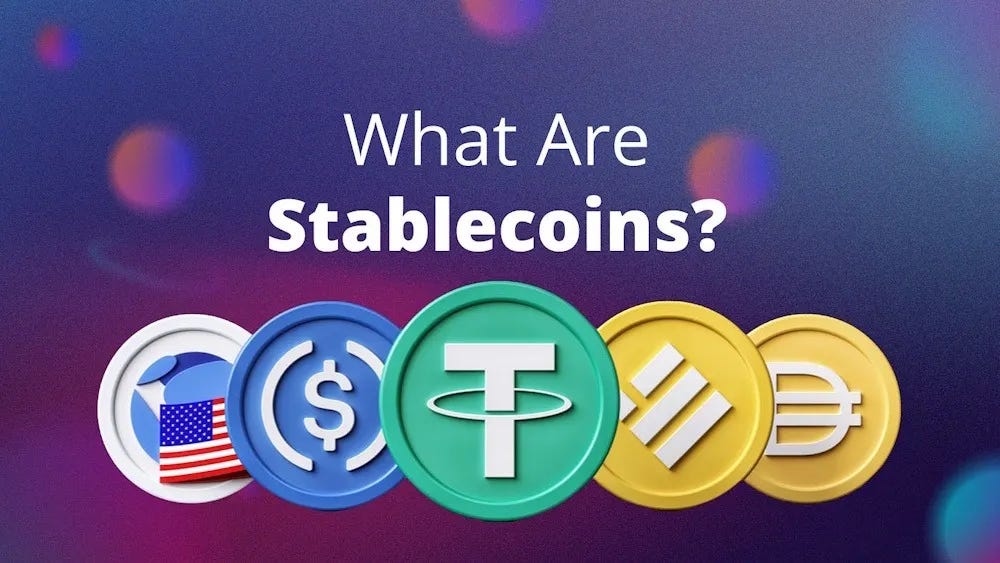
In 2025, the world of digital finance is being transformed by one of its most reliable innovations: fiat-backed stablecoins. These digital tokens, anchored to traditional currencies such as the US dollar, euro, or Chinese yuan, offer the predictability of fiat and the efficiency of blockchain. Governments are racing to regulate them, corporations are adopting them, and innovators are building entirely new financial ecosystems on top of them.
Fiat-backed stablecoins are no longer niche crypto tools. They are fast becoming the backbone of next-generation finance, commerce, and investment.
What Are Fiat-Backed Stablecoins?
A fiat-backed stablecoin is a digital asset tied directly to a real-world currency. For example, each USDC (issued by Circle) or USDT (issued by Tether) is typically backed by one US dollar or an equivalent liquid asset held in reserve. These tokens are issued and redeemed on demand and are designed to hold their value consistently, making them a safe medium of exchange in volatile markets.
Unlike other forms of stablecoins, such as algorithmic or crypto-collateralised variants, fiat-backed stablecoins provide trust through reserve audits and transparency. They are for payments, remittances, and decentralised finance, where users want a digital asset with minimal price fluctuation.
To users, a fiat-backed stablecoin functions like a digital version of cash that can be sent across borders instantly, settled in minutes, and used 24/7 without relying on traditional banking systems.
Why do Stablecoins outperform traditional e-wallets or platforms such as WISE?
While digital wallets like Touch ‘n Go, Wise, or PayPal enable digital transactions, they are still tied to legacy financial infrastructure. Banking hours, intermediary fees, and foreign exchange costs limit cross-border payments through these platforms.
Fiat-backed stablecoins solve these inefficiencies. They enable global, near-instant value transfer at a fraction of the cost. Unlike e-wallets, which are often siloed within specific regions or apps, stablecoins operate across open, interoperable blockchain networks. Anyone with a smartphone and an internet connection can use them, regardless of geography.
Moreover, stablecoins are programmable. Businesses can automate payments, implement real-time settlement conditions, or embed compliance rules directly into the token’s logic. This functionality creates new efficiencies and unlocks business models that traditional financial tools cannot support.
Real-World Asset Integration
Their growing connection to real-world assets is a compelling evolution in the stablecoin ecosystem (RWA). These include tokenised bonds, real estate, and commodities digitised and traded using fiat-backed stablecoins.
For example, investors can purchase fractional shares of commercial real estate properties using USDC, gaining exposure to physical assets with lower entry barriers. In invoice financing, businesses tokenise accounts receivable and receive instant liquidity in stablecoins, bypassing the delays and bureaucracy of banks.
This integration of real-world assets into blockchain ecosystems, supported by the reliability of fiat-backed stablecoins, creates a more inclusive and accessible investment landscape.
The Global Regulatory Push
United States:
The United States made history in 2025 by enacting the GENIUS Act, a comprehensive regulatory framework for fiat-backed stablecoins. The law requires issuers to maintain 100 per cent liquid reserves, undergo regular audits, and enables eligible institutions to access Federal Reserve payment rails. This legal clarity is driving institutional confidence and accelerating mainstream adoption.
Hong Kong:
In parallel, Hong Kong passed the Stablecoin Ordinance in May 2025, introducing one of the world’s most rigorous licensing regimes for fiat-referenced stablecoins. Issuers must meet capital requirements, ensure 1:1 redemption, and maintain segregated reserves. Hong Kong’s approach signals its intent to become a global digital asset hub and a credible alternative to US-led models.
Mainland China:
China continues to promote its state-issued digital yuan while limiting domestic use of private stablecoins. However, Chinese tech giants like Ant Group and JD.com are lobbying to issue offshore yuan and Hong Kong dollar-denominated stablecoins under Hong Kong’s new law. These efforts reflect China’s broader ambition to internationalise its currency using regulated digital tools.
Southeast Asia and Latin America:
Singapore is a pioneer in balancing innovation and regulation, finalising its stablecoin framework in 2023. In Latin America, stablecoins are increasingly used daily to escape inflation, particularly in Argentina, Venezuela, and Brazil.
Leading Industry Players
The fiat-backed stablecoin market is led by:
Circle, issuer of USDC, is known for transparency and regulatory alignment
Tether, issuer of USDT, the largest by market cap and widely used in emerging markets
PayPal, whose PYUSD token is now integrated across its merchant platform
Stripe, which facilitates USDC payouts in over 69 countries, is improving speed and cost-efficiency in cross-border payments.
Traditional financial networks are following suit. Visa and Mastercard have launched pilots to enable stablecoin-based settlements, while Shopify, Uber, and Apple are exploring integration for commerce and rewards systems.
Economic Significance
Fiat-backed stablecoins are critical to the global digital economy. As of mid-2025, the market cap exceeds $228 billion, with daily transaction volumes surpassing $7 billion. Analysts project that 2028 stablecoin issuers could collectively hold over $1.6 trillion in U.S. Treasuries, embedding themselves deeply within the traditional financial system.
Beyond payments, fiat-backed stablecoins are foundational in the rise of decentralised finance, tokenised securities, and digital asset investment products. They are not just a means of transfer but a gateway to new forms of capital formation and liquidity.
Opportunities and risks for Sunway:
Adopting fiat-backed stablecoins can free up working capital, reduce transaction costs, and open Sunway to global investors, students, and tourists. Proper compliance and risk controls position Sunway as an innovator in finance, real estate, and digital commerce.
Education: International students could pay tuition and fees instantly in stablecoins (e.g., USDC), avoiding delays and high fees tied to banks or intermediaries.
Real Estate: REITS and property divisions could issue tokenised shares of real estate assets, purchasable with stablecoins. This would allow global investors to participate in Malaysia’s property market at lower entry points, increasing liquidity and reach.
Retail and Hospitality: Malls, Hotels, and Theme Parks could accept stablecoins directly from international tourists. This would eliminate foreign exchange costs, enhance convenience, and position Sunway as a forward-looking destination for global travellers.
Despite their advantages, fiat-backed stablecoins carry risks that must be managed:
Regulatory compliance: Varying rules across jurisdictions require thorough legal oversight.
Reserve transparency: Trust hinges on clear, independent audits and disclosures.
Cybersecurity: Platforms must defend against hacks, thefts, and system failures.
Liquidity stress: During market downturns, issuers must ensure they can meet redemption demands.
Conclusion
Fiat-backed stablecoins are redefining what money can be in the digital economy. Their stability, speed, and interoperability make them far superior to legacy systems for many use cases. As global regulatory clarity grows and enterprise adoption scales, they may become central to payments, investments, and the tokenisation of real-world assets.