

GenAI has been making waves across the AI community these last few weeks with the rollout of Google Gemini 3, Qwen 3-Max, MiniMax M2 and many more. Three years after Google famously declared “Code Red” over the sudden rise of ChatGPT, reports now claim that Sam Altman is doing the same, this time in response to Google’s comeback with Gemini 3.
Google Gemini 3 has been leading the charts across LMArena Leaderboards, especially with its integration of Nano Banana Pro image model and Veo 3.1 video generator. It has dominated the multimodal rankings so consistently that it sparked a light-hearted debate within the Sunway iLabs team. And with major players tossing around alarms and racing to out-innovate one another, we figured we’d have some fun testing the tools available to us and see what all the excitement is really about.
So we did what any curious innovation team would do; we put a couple of leading models to the test using the exact same prompt, partly to learn, partly to explore and partly because we simply wanted to see how differently each AI would “imagine” the same scene. At the same time, it was a practical way to understand how these tools work in everyday creative scenarios, the kind of insight you don’t get from charts and benchmarks alone.
Naturally, AI doesn’t sit still of course. Just as we wrapped up our experiment, OpenAI dropped Chat GPT-5.2, adding yet another twist to an already dramatic month in GenAI. With new releases and surprise partnerships rolling out almost every week, the landscape is changing faster than any leaderboard can keep up with. All the more reason for us to get hands-on and see how these tools perform in real creative scenarios, not just on paper.
Three Frontier Video Models, One Magical Prompt: Our GenAI Creativity Test
With the recent excitement around Wicked For Good, we decided to use a fantasy-inspired prompt for this test that could reveal how each model handles motion, lighting, atmosphere, and fine creative detail.
Source: Wicked For Good Teaser
(Note: We did not upload this video as a reference to any of the GenAI during this test)
The Prompt We Used
To test the models fairly, we adapted a theatrical, Wicked-inspired prompt:
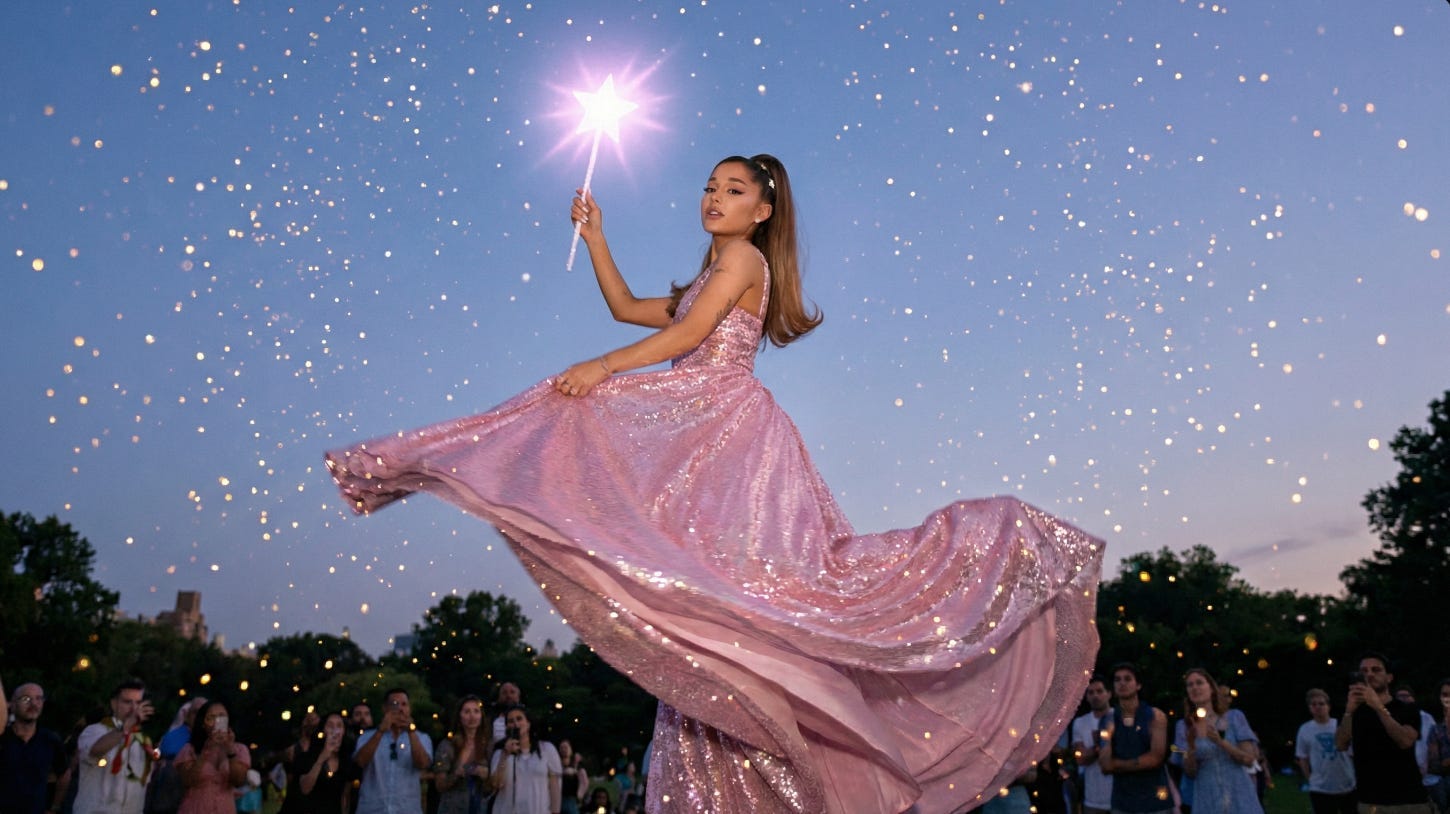
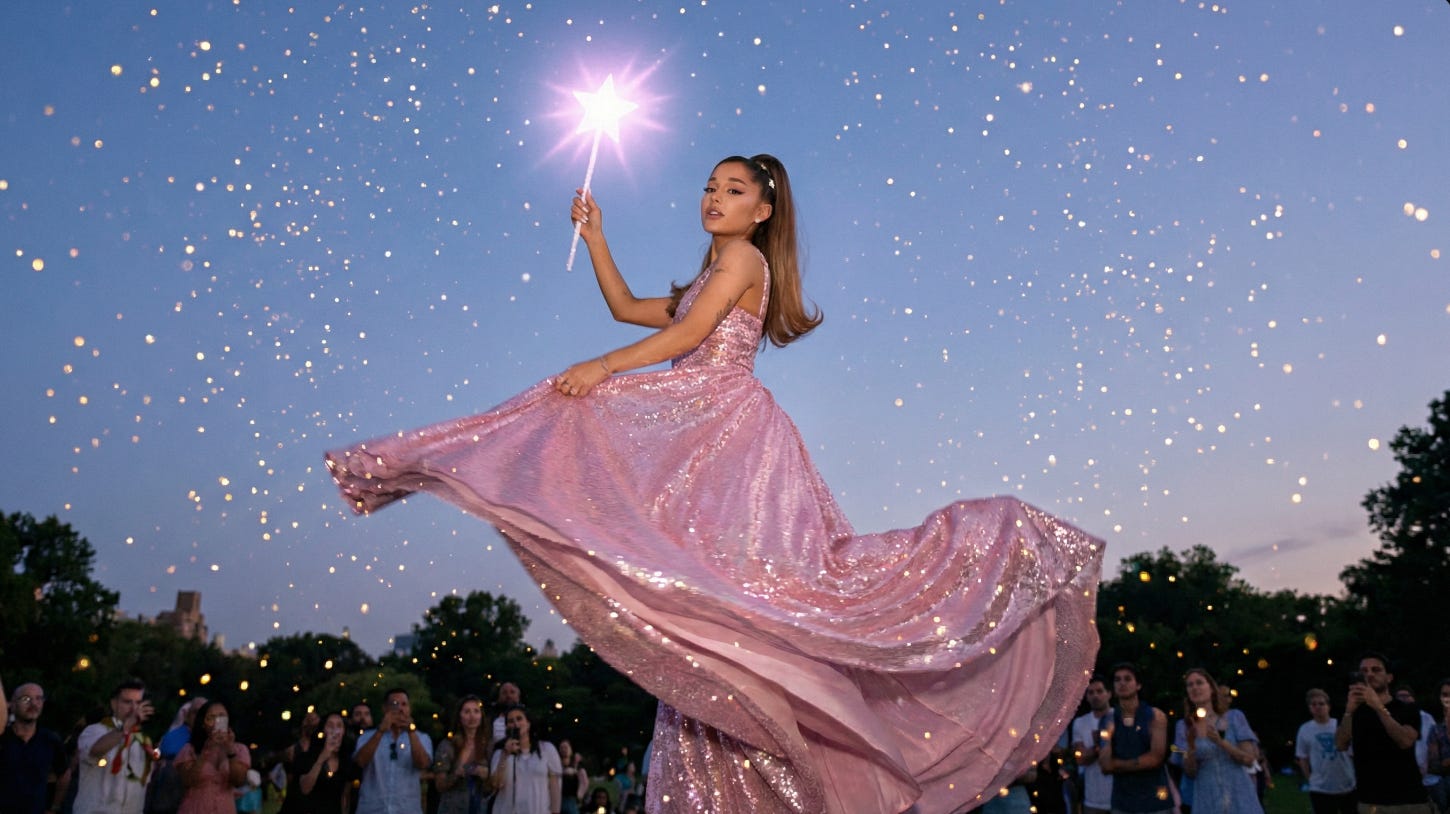
“A woman who looks like Ariana Grande in a pink dress swirling upwards to the sky with glitters around, hand holding a white star wand and the wand is flashing light.”
Google Gemini 3 (Veo 3.1) vs MiniMax M2 (Hailuo 2.3) vs Qwen3-Max
Even though all three models received the exact same prompt, they each “imagined” the scene in their own way, their outputs reflected entirely different creative moods.
Google Gemini 3 (Veo 3.1)
Google Gemini 3 highlights Veo 3.1 as having upgraded level of accuracy for video generation, producing short, audio-enhanced clips with noticeably higher realism, smoother motion, and richer overall sound design.
Our test definitely reflected this when Google Gemini 3 (Veo 3.1) turned our prompt into what looked like a tiny, sparkling fantasy movie clip, with a glossy ****Barbie-like aesthetic. The character floats upward gracefully in the sky, with glitters swirling perfectly in sync with her movement, and the wand impressively flashes exactly where the prompt describes it.
Google Gemini 3 (Veo 3.1) even adds sound by including a soft whooshing as the character rises and a twinkly shimmer for the glitter effect. The combination of visuals and audio makes the whole scene feel intentional, polished and cinematic.
Minimax M2 (Hailuo 2.3)
MiniMax M2 describes that its latest text-to-video model, Hailuo 2.3, can deliver improved motion stability, and more consistent character animation.
In our testing, MiniMax M2 (Hailuo 2.3) went in a slightly different direction than Google Gemini 3 (Veo 3.1), giving us something that felt more like a luxury perfume commercial. The motion is smooth and gentle, the camera glides elegantly, and the overall aesthetic is soft and atmospheric.
Unlike Google Gemini 3 (Veo 3.1), this video did not include sound. This is likely because MiniMax offers a dedicated audio model, known as MiniMax Audio, which actually gives creators more control to pair custom sound with the generated clip. Visually, the output is surprisingly refined, not as glossy as Google Gemini 3 (Veo 3.1), but dreamy, elegant and beautifully composed.
Qwen 3-Max
On the other hand, Qwen 3-Max advocates for its strong multimodal understanding with upgraded spatial-temporal modeling for video analysis and long-context visual reasoning.
Our testing showed that Qwen 3-Max took our prompt in a much more stylised direction. Instead of realism, the output looks more like a fantasy illustration gently animated into motion. The character rises, though with a simpler and flatter motion compared to the other two. There’s a plainness to the movement that makes the output feel slightly less alive.
Yet, Qwen 3-Max includes audio, except not in the cinematic sense. Instead, the model generated a speaking voice and even some unexpected singing woven into the clip. It’s quirky, a little random, but undeniably entertaining, giving the video a personality neither Google Gemini 3 (Veo 3.1) nor MiniMax M2 (Hailuo 2.3) attempted.
Image Generation Comparison
To complement the video test, we also ran the same prompt through their image generation. This gives a clearer sense of each model’s visual instincts before motion is added.
Google Gemini 3 (Nano Banana Pro)
Minimax M2 (Hailuo Image-01)

Qwen 3-Max

Across the image test, each model interpreted the same prompt with noticeably different creative styles:
Google Gemini 3 (Nano Banana Pro) went full photography mode. It produced the most photorealistic result, with detailed fabric movement, natural lighting, and a fully grounded environment that felt like an outdoor photoshoot.
Minimax M2 (Hailuo Image-01) generated something that feels like a magical romance cover art. The image glows with warm, peachy light, and the character looks soft and ethereal; less photorealistic, but much more atmospheric.
Qwen 3-Max once again delivered something completely different. The image looks like it came straight out of a Disney-style animated movie poster. The colour gradients are bold, outlines are sharp, sparkles are dramatic, and the character design leans closer to a digital art style. Its vibrant and whimsical illustration is not trying to be realistic, yet charming in its own way.
Additionally, both image and video models by Google Gemini 3, Nano Banana Pro and Veo 3.1, are available through the MiniMax M2 platform, offering creators a convenient way to test different frontier systems side by side without switching tools—something that will only accelerate experimentation as the ecosystem matures.
What This Reveals
After seeing the wildly different interpretations of our prompt produced by the GenAI models, one thing became very clear: each AI model has its own creative styles.
Google Gemini 3 (Veo 3.1) delivered the most accurate interpretation of our prompt with its polished and cinematic result, Minimax M2 (Hailuo 2.3) offered a softer and elegant visuals, and Qwen 3-Max, kept things simple and stylised, with motion that felt basic but quirky.
The still images reinforced similar comparisons, with Google Gemini 3 (Nano Banana Pro) leaning more towards photorealistic, Minimax M2 (Hailuo Image-01) rendering a magical romance aesthetic and Qwen 3-Max producing a more illustrative style.
Together, these results reveal that creative GenAI isn’t a one-size-fits-all tool, it’s more like a cast of characters, each with its own strengths, styles and quirks. Some models shine in realism, some in motion, some in atmosphere, and some in expressive style. The best choice ultimately depends on the kind of visual you want to create.
And honestly? That’s the fun of it. The only way to discover your favourite is to explore, play and test different prompts and platforms to see which one fits your workflow. Because in this Wicked-inspired little showdown, every model brought its own kind of magic.
Coming Up Next: But here’s the twist—while AI models race to out-create each other, who actually owns what they generate? In our next piece, we’re diving into the evolving landscape of intellectual property (IP) and generative AI, where the lines between human creativity, machine output, and legal ownership are getting fascinatingly blurry.
Acknowledgements
Thank you to the Sunway iLabs team for their invaluable contribution and insights in preparing this article.